.avif)


The pace of change is kind of wild. Five years ago, if you told me we'd be having serious conversations about AI pricing homes or people buying property fractions on blockchain, I would've been skeptical. But here we are.
The thing is, not all "PropTech" is created equal. Some of it is genuinely transformative. Some of it is just... noise. After talking with dozens of agents, property managers, and investors over the past year, I've got a pretty clear picture of what's actually making a difference versus what's just Silicon Valley hype.
Let's dig into the stuff that matters.
Artificial intelligence in real estate isn't coming, it's already embedded in tools you might be using without even realizing it.
Take market analysis. Remember spending entire weekends pulling comps, analyzing trends, trying to figure out if a neighborhood was about to pop? That process has been completely overhauled. Modern AI tools chew through millions of data points, everything from school district ratings to crime patterns to which coffee shops are opening nearby and spit out predictions that are frankly better than what most human analysts could produce.
Lead generation is another area where AI has become indispensable. Instead of manually qualifying every inquiry (which, let's be honest, most of us hated doing), smart systems now track user behavior across platforms. They know who's casually browsing versus who's actually ready to pull the trigger on a purchase. That distinction saves agents countless hours.
And then there's the whole conversational search thing. ChatGPT-style interfaces are starting to replace traditional search filters on property sites. You can literally type "show me dog-friendly houses with big yards near top-rated elementary schools under $600k" and get relevant results immediately. It's not perfect yet, but it's getting better fast.
The agents who've adopted these AI tools aren't getting replaced, they're becoming more efficient than their competitors. That's the real story here.
I'll be straight with you: five years ago, "smart building" features felt gimmicky to me. Like, sure, controlling your lights from your phone is cool I guess? But who actually cares?
Turns out, a lot of people care. And for good reasons that go way beyond novelty.
Modern smart buildings, especially commercial ones, can basically run themselves. Temperature adjusts based on how many people are in the building. Maintenance issues get flagged before they become expensive problems. Energy consumption is optimized in real-time.
A property manager I know in Chicago told me his operating costs dropped 28% after retrofitting his buildings with IoT sensors. Twenty-eight percent! That's not a rounding error, that's a completely different profit margin.
And it's not just about savings. Tenants actually expect this stuff now, especially in commercial real estate. Buildings without smart features are starting to feel outdated, the same way buildings without central air felt outdated in the 90s.
Investors are paying attention too. Properties with integrated smart systems command higher valuations and attract better tenants. The ROI is becoming pretty clear.
Remember when virtual reality was supposed to revolutionize everything like a decade ago? And then... it didn't?
Well, in real estate, it actually kind of did. Just took longer than the hype cycle predicted.
Virtual property tours today aren't the janky 360-photo experiences from 2018. They're genuinely immersive. You can walk through a property, look up at the ceiling, peek into closets, get a real sense of the space all from your couch.
For international buyers or people relocating from across the country, this is massive. Why fly out to see ten properties when you can narrow it down to two or three using VR first?
Augmented reality is doing something similar but different. Point your phone at an empty room and you can visualize how your furniture would fit. Thinking about renovations? AR shows you the finished product before you spend a dime.
I've heard from multiple agents that these technologies have fundamentally changed their showing process. Buyers show up to in-person tours already knowing whether they're seriously interested. Less tire-kicking, more actual decisions.
The global reach angle matters too. A developer in Miami told me he's selling condos to buyers in Singapore and London who never set foot in Florida until closing. That wasn't really possible before VR matured.
Okay, real talk: I was a blockchain skeptic for years. It seemed like a solution in search of a problem, wrapped in way too much hype and buzzwords.
But in real estate specifically? It's starting to make sense.
Smart contracts are the most practical application. These are basically self-executing agreements that trigger automatically when conditions are met. No waiting for signatures from five different parties. No title company bottlenecks. The contract just... executes.
I watched a commercial property transaction close in four days using smart contracts. Four days. That same deal would normally take weeks, maybe a month.
Then there's tokenization, which sounds complicated but isn't. Essentially, blockchain allows fractional ownership of properties. Instead of needing half a million dollars to invest in commercial real estate, you can buy tokens representing, say, 2% of a building. This opens up investment opportunities to people who were completely shut out before.
Property records on blockchain are tamper-proof, which reduces fraud risk significantly. And the transparency helps with due diligence; everything is verifiable without needing to trust a third party.
Are there still challenges? Sure. Regulatory uncertainty is real. But the technology itself has moved from theoretical to functional.
Every click, every search, every mortgage application it all creates data trails. And if you know how to read those trails, you can spot patterns that most people miss.
Real estate professionals using big data analytics aren't just reacting to markets anymore. They're predicting them. Which neighborhoods are gentrifying? Where are property values likely to spike or crash? What features are buyers in specific areas actually willing to pay premiums for?
Pricing algorithms have gotten scary good. They consider hundreds of variables simultaneously recent comparable sales, seasonal trends, planned infrastructure projects, even social media sentiment about neighborhoods. The result is pricing accuracy that would've been impossible a decade ago.
Risk assessment has improved dramatically too. Before investing, you can now analyze flood risks, potential environmental issues, future development plans, demographic shifts all factors that might affect long-term value.
The gap between data-savvy investors and everyone else is widening. The ones using analytics are consistently finding better deals and avoiding expensive mistakes.
If there's one group that's benefited most from technology, it's probably property managers.
Rent collection is completely automated now. No more phone calls chasing late payments. No more trips to the bank to deposit checks. The system handles reminders, processes payments, escalates issues all without human intervention.
Tenant screening used to take days of manual work. Background checks, reference calls, employment verification were tedious. Now AI platforms can analyze everything in minutes and give you a comprehensive risk assessment.
Maintenance workflows are streamlined too. Tenant reports a problem through an app. The system prioritizes it, assigns it to the right vendor, schedules the repair, and updates everyone. Nothing falls through the cracks.
I know property managers who've gone from managing maybe 50 units comfortably to managing 200+ with the same staff. That's pure efficiency gain from technology.
Sustainable technology in real estate has moved beyond virtue signaling. It's become economically compelling.
Energy monitoring systems can identify waste patterns and reduce utility costs by 20-40% in many buildings. That's real money hitting the bottom line every month.
Green certifications LEED, Energy Star, whatever command price premiums now. Buyers and tenants care about environmental impact more than they used to, and they'll pay extra for properties that align with their values.
Solar panels, smart thermostats, water conservation systems aren't just environmental features anymore. They're value-add amenities that boost property values while reducing operating expenses.
Plus, regulations are tightening. Buildings that aren't energy-efficient are going to face increasing compliance costs and penalties. Getting ahead of that curve makes financial sense.
Here's what I think is happening: we've crossed some kind of threshold where technology in real estate isn't optional anymore. It's the baseline.
The agents and investors who are thriving right now aren't necessarily the most tech-savvy. They're the ones who identified their biggest pain points and found tools to address them. They started small, learned thoroughly, then expanded.
You don't need a massive budget or a computer science degree. Most of this technology is more accessible than ever. But you do need to start somewhere.
The professionals I know who are struggling? They're the ones who keep waiting. Waiting for the technology to mature. Waiting for prices to drop. Waiting for someone else to figure it out first.
Meanwhile, their competitors are using AI to work faster, VR to reach more buyers, data analytics to make better decisions, and automation to scale their operations.
The advantages are real and measurable:
Technology isn't the future of real estate. That ship sailed. It's the present reality.
The real estate industry has always run on relationships and trust. Technology doesn't change that fundamental truth. It just gives you better tools to serve clients, make smarter decisions, and operate more efficiently.
The professionals who figure out how to blend technological efficiency with human connection those are the ones who'll dominate through 2026 and beyond.

Learn how to calculate ARV (After Repair Value) using the proven formula, comparable sales, and repair costs. A complete guide for wholesalers, house flippers, and real estate investors.
.png)
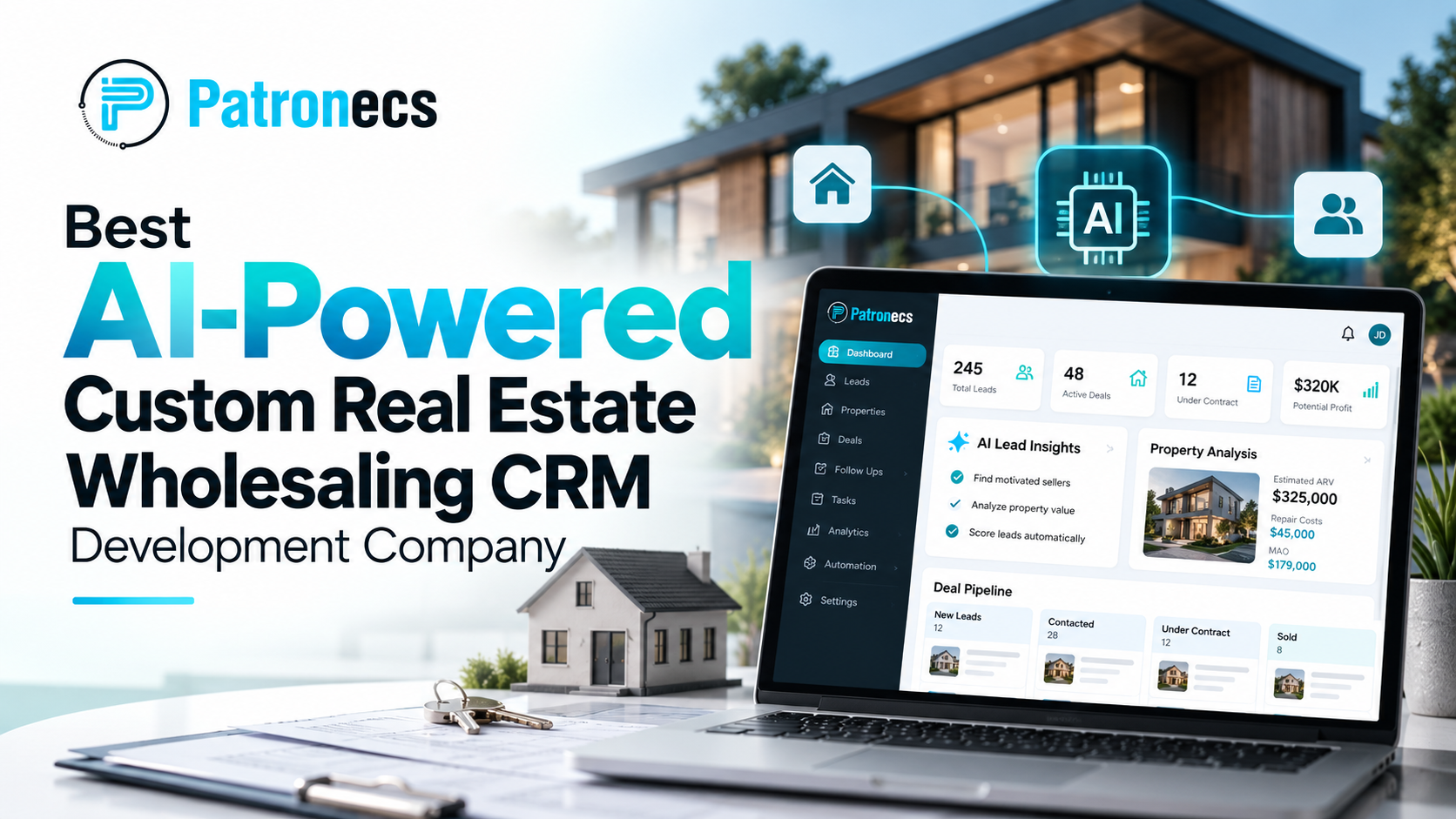
Looking for the best AI-powered real estate wholesaling CRM development company? Learn what to look for and why custom CRM solutions outperform generic software.
AI, probably. It touches everything: pricing, marketing, customer service, and analytics. The compounding effects are significant. But honestly, the "biggest impact" depends on what part of real estate you're in. For property managers, automation might matter more. For investors, big data analytics. There's no one-size-fits-all answer.
No, not entirely. Most buyers still want to see properties in person before making offers. But VR and AR are perfect for initial screening. They help buyers eliminate properties that aren't right without wasting time on pointless showings. For international investors, virtual tours have become essential though.
Speed and security, mainly. Smart contracts execute automatically when conditions are met, which eliminates delays from manual processes. The transparent, tamper-proof ledger reduces fraud risk. And cutting out intermediaries can significantly lower transaction costs. It's not mainstream yet, but it's getting there.
Yes, consistently. Buyers under 45 especially which is most of the market now specifically look for smart features. IoT systems, smart thermostats, automated lighting, security systems all add value. It's similar to how granite countertops and stainless appliances became expected rather than premium features.
Not at all. That's actually one of the best developments. Individual agents can access sophisticated AI tools. Small landlords can use powerful property management apps. The tools scale from enterprise platforms down to smartphone apps that cost $30-50 monthly. Technology is democratizing real estate, not consolidating it.
Start small and specific. Pick one problem you're dealing with right now, maybe lead generation, maybe market analysis, maybe property management and find a tool that addresses it. Learn it thoroughly before adding more tools. Also invest in training, both for yourself and any team members. The biggest mistake is trying to adopt everything at once or waiting until you're behind.

.webp)
.svg)
.png)


